
Blog
Tactical Shooting: Precision Skills for Real-World Scenarios

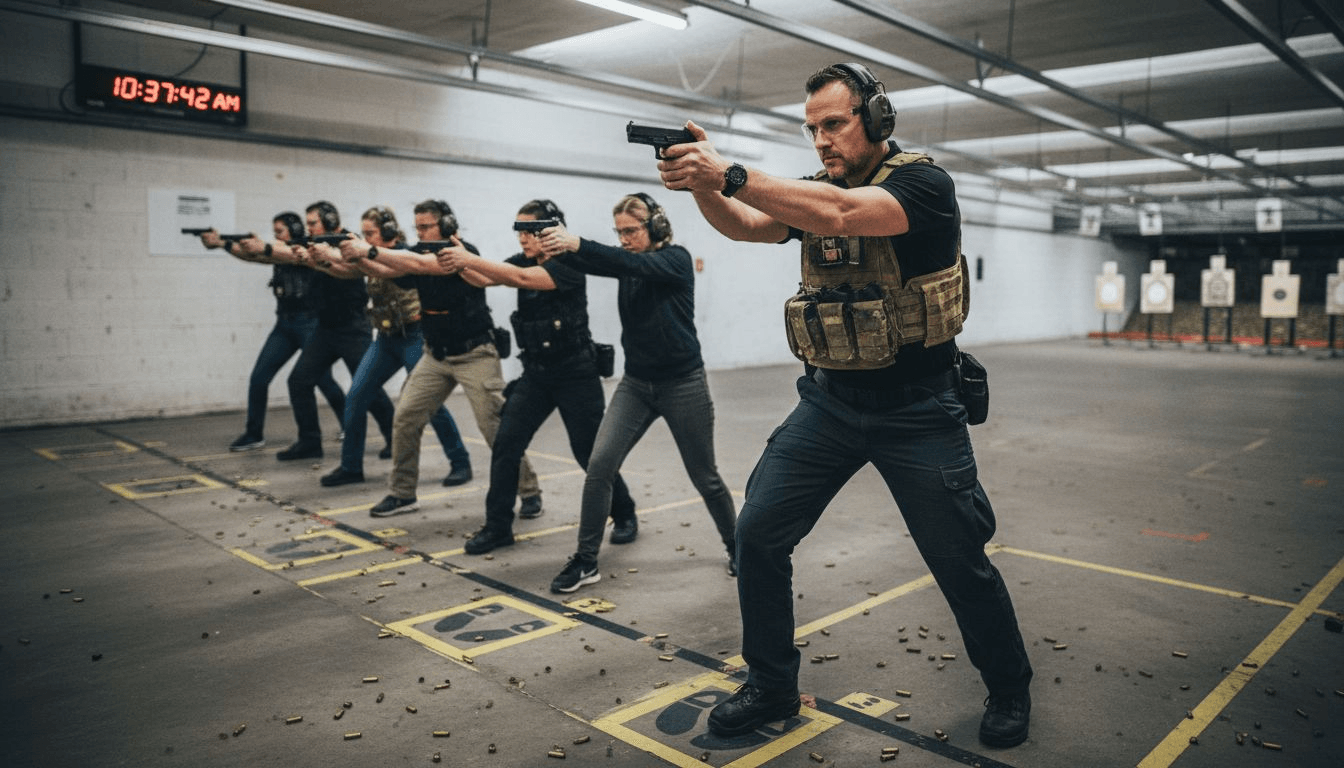
Most advice about tactical shooting gets it wrong, treating it as simple marksmanship instead of a high-stakes mental and physical challenge. Competitive american marksmen and tactical shooters worldwide know that precision drops sharply—sometimes by over 30 percent—under real stress or exhaustion. Mastering this discipline means unlearning common myths and embracing techniques that blend advanced movement, sharp situational awareness, and smart gear choices to prevail when every shot counts.
Table of Contents
- Tactical Shooting Defined And Common Myths
- Major Types Of Tactical Shooting Disciplines
- Core Tactical Techniques And Skillsets
- Essential Equipment And Gear Selection
- Common Mistakes And Safety Principles
Key Takeaways
| Point | Details |
|---|---|
| Tactical Shooting Complexity | Tactical shooting involves advanced skills beyond marksmanship, including physical conditioning and mental resilience. |
| Emphasis on Dynamic Skills | Success in tactical shooting comes from adapting to shifting environments rather than merely achieving accuracy. |
| Core Techniques | Effective tactical operators integrate weapon handling, situational awareness, and rapid decision-making. |
| Importance of Gear Selection | Choosing versatile and modular gear is crucial for enhancing operational effectiveness in tactical scenarios. |
Tactical Shooting Defined and Common Myths
Tactical shooting represents a complex discipline far beyond traditional marksmanship, involving precise skill execution under extreme physical and psychological conditions. Unlike recreational target practice, tactical shooting demands split-second decision making, stress management, and performance under challenging environmental scenarios. Research from Texas A&M University’s comprehensive study demonstrates that accuracy dramatically decreases when shooters experience physical exhaustion or high-stress situations.
Common myths about tactical shooting often portray it as a static, technical skill that relies solely on weapon proficiency and aim. Reality reveals a much more nuanced landscape. Tactical shooting integrates multiple complex skills including physical conditioning, mental resilience, situational awareness, and rapid decision-making processes. Professional operators understand that shooting performance is fundamentally linked to overall physical readiness, cognitive control, and stress management techniques.
The most pervasive misconception suggests that tactical shooting is primarily about achieving perfect accuracy under controlled conditions. In reality, true tactical shooting performance emerges from an operator’s ability to maintain precision while managing dynamic, unpredictable environments. Physical exertion, psychological pressure, and rapidly changing scenarios create significant challenges that standard training often fails to address. Successful tactical shooters develop comprehensive skill sets that transcend pure marksmanship, incorporating advanced movement techniques, adaptive thinking, and robust stress response mechanisms.
Pro tip: Integrate regular high-intensity interval training and stress simulation exercises into your tactical shooting preparation to improve real-world performance and situational adaptability.
Major Types of Tactical Shooting Disciplines
Tactical shooting disciplines have dramatically evolved from traditional military training into sophisticated competitive and skill development platforms. The modern landscape of tactical shooting sports encompasses multiple specialized disciplines that challenge participants physically and mentally, requiring precise technical skills and rapid decision-making abilities.
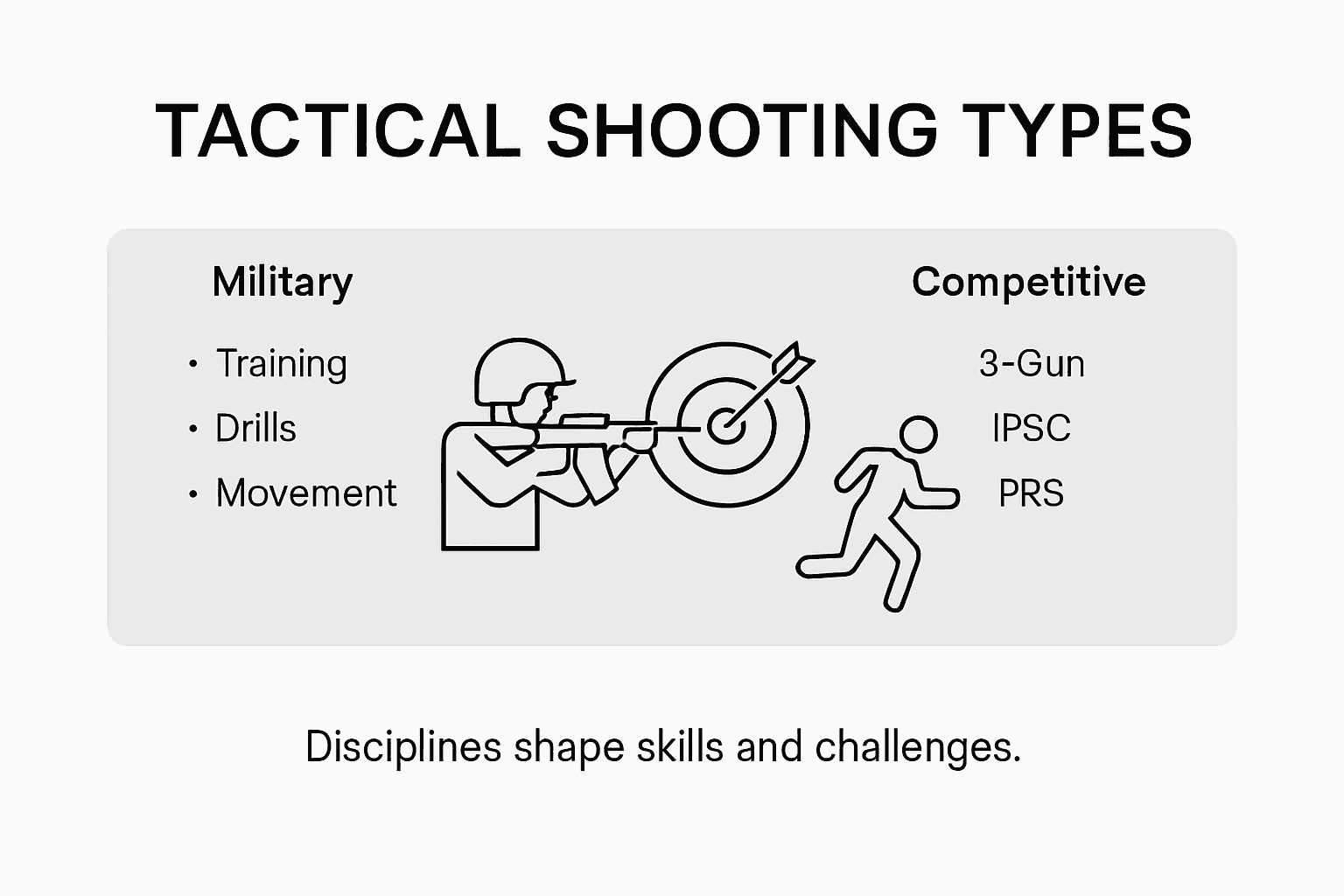
Three primary tactical shooting disciplines dominate the contemporary landscape. 3-Gun Competitions represent the most dynamic, challenging participants to rapidly transition between rifle, shotgun, and handgun platforms while navigating complex obstacle courses. These events test not just marksmanship, but also physical conditioning, weapon transition speed, and situational adaptability. Precision Rifle Series focus intensely on long-range accuracy, demanding shooters master complex environmental calculations, wind reading, and extreme positioning techniques that simulate real-world tactical engagement scenarios.
The International Practical Shooting Confederation (IPSC) offers perhaps the most intense tactical shooting discipline, emphasizing lightning-fast handgun performance under high-stress conditions. IPSC competitions simulate real-world threat scenarios, requiring shooters to engage multiple targets quickly, move dynamically, and make split-second targeting decisions. Unlike traditional marksmanship events, these disciplines integrate comprehensive skill sets that mirror actual operational requirements for military and law enforcement professionals.
Pro tip: Cross-train across multiple tactical shooting disciplines to develop a more comprehensive skill set and improve your overall shooting adaptability.
Here’s how the primary tactical shooting disciplines compare:
| Discipline | Key Focus | Core Challenge | Typical Skills Emphasized |
|---|---|---|---|
| 3-Gun Competitions | Multi-weapon transitions | Navigating complex obstacle runs | Speed, adaptability, coordination |
| Precision Rifle Series | Long-range accuracy | Dealing with wind and distance | Calculations, stability, control |
| IPSC (Handgun Focused) | Rapid handgun shooting | Making split-second shooting decisions | Movement, target prioritization |
Core Tactical Techniques and Skillsets
Core tactical techniques encompass a sophisticated blend of physical skills, mental strategies, and technical proficiencies that extend far beyond basic marksmanship. Comprehensive research from the U.S. Army Research Institute reveals that successful tactical operators must integrate multiple complex skill domains, including precise weapon manipulation, strategic movement, and dynamic situational awareness.
Weapon Handling represents the fundamental technical cornerstone of tactical performance. This skill involves more than simple firearm proficiency – it demands seamless, intuitive weapon management under high-stress conditions. Operators must develop muscle memory for rapid magazine changes, smooth weapon transitions, and consistent shooting positions that maximize accuracy while minimizing exposure. Advanced techniques include one-handed reloading, shooting from unconventional positions, and maintaining weapon control during physical movement.
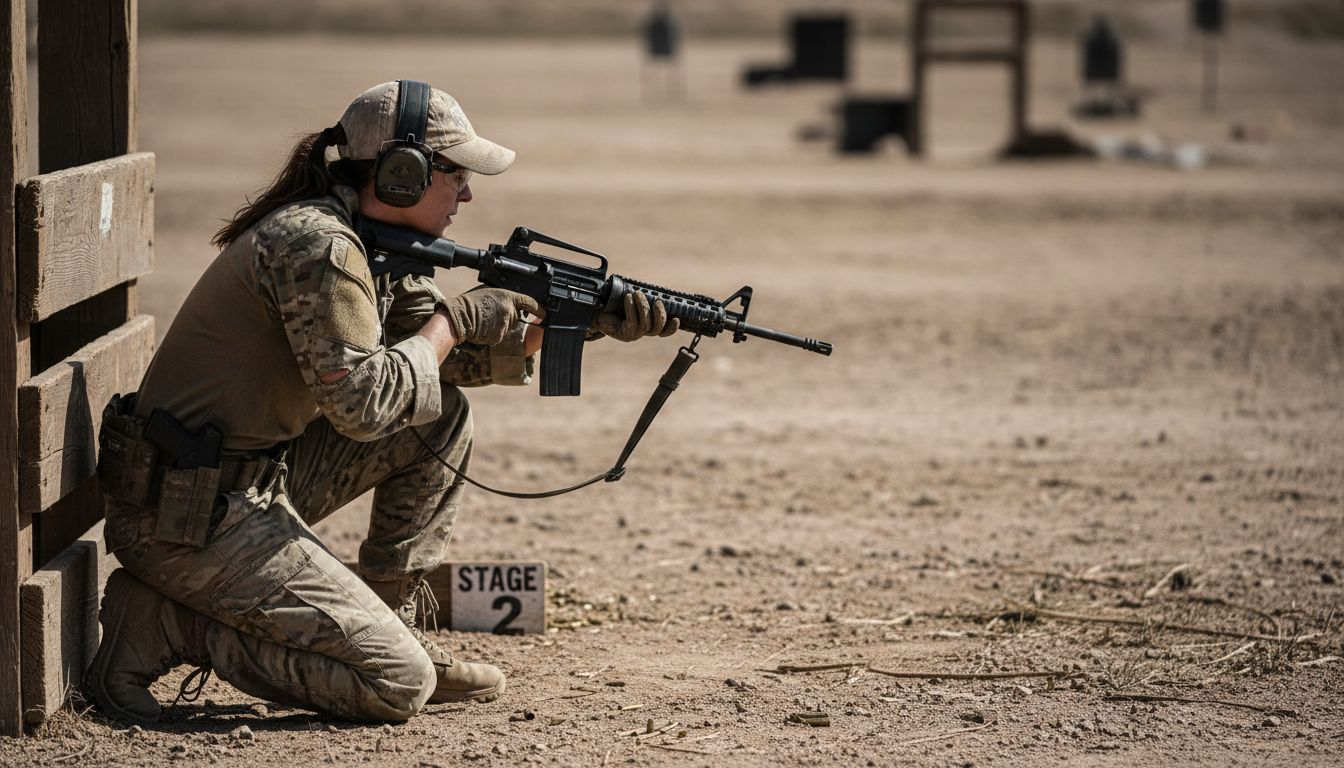
Situational awareness and tactical decision-making form the critical psychological component of tactical skillsets. Successful operators must process complex environmental information rapidly, anticipate potential threats, and make split-second choices that prioritize team and individual safety. This requires developing heightened observational skills, understanding spatial dynamics, and maintaining calm cognitive function under extreme psychological pressure. Training methodologies increasingly emphasize scenario-based simulations that challenge operators to make nuanced judgments while managing physical and emotional stress responses.
Pro tip: Integrate regular stress inoculation training and scenario-based exercises to develop more robust situational awareness and decision-making capabilities under high-pressure conditions.
Essential Equipment and Gear Selection
Tactical gear selection represents a critical foundation for operational effectiveness, requiring meticulous attention to protection, functionality, and adaptability. Comprehensive tactical gear research demonstrates that successful equipment choices balance multiple performance factors, integrating protection, mobility, and mission-specific requirements.
Protective Systems form the core of tactical gear selection. Modern plate carriers must provide comprehensive ballistic protection while maintaining lightweight maneuverability. Critical components include NIJ-certified ballistic plates, strategically designed MOLLE (Modular Lightweight Load-carrying Equipment) attachment systems, and ergonomic load distribution mechanisms. Operators must prioritize plate carriers that allow rapid movement, facilitate quick gear access, and provide substantial fragmentation and ballistic protection across critical body zones.
Beyond protective systems, tactical gear selection demands holistic consideration of supplementary equipment. Communication devices, medical kits, hydration systems, and specialized tools must integrate seamlessly with primary protective gear. Advanced tactical operators focus on modular systems that allow rapid reconfiguration based on mission parameters. This approach requires selecting gear with universal compatibility, quick-release mechanisms, and durability that can withstand extreme environmental conditions. Tactical gloves, reinforced boots, eye and ear protection, and performance-oriented clothing complete the comprehensive equipment ecosystem.
Pro tip: Invest in modular gear systems that allow rapid configuration and prioritize versatility over specialized single-purpose equipment.
Summary of essential factors for tactical gear selection:
| Gear Element | Main Purpose | Selection Priority |
|---|---|---|
| Plate Carrier | Ballistic protection | Lightweight, ergonomic, modular |
| Communication Device | Team coordination | Durability, integration |
| Medical Kit | Emergency response | Accessibility, completeness |
| Hydration System | Operator endurance | Easy refill, secure attachment |
Common Mistakes and Safety Principles
Tactical shooting demands a sophisticated approach that transcends simplistic training methodologies, requiring critical awareness of potential performance-limiting mistakes. Comprehensive research into tactical training errors reveals that most operational failures stem from predictable and preventable training deficiencies that can be systematically addressed through deliberate practice and mental conditioning.
Safety Fundamentals represent the absolute cornerstone of tactical shooting performance. The most critical mistake operators make involves treating firearms as static tools rather than dynamic systems requiring constant situational awareness. This means developing comprehensive safety protocols that extend beyond basic weapon handling – integrating psychological preparedness, environmental assessment, and split-second decision-making capabilities. Successful tactical operators understand that safety is not a passive state but an active, continuously monitored process that demands unwavering attention to potential threat vectors and personal limitations.
Training methodology plays a pivotal role in preventing common tactical shooting mistakes. Many operators repeatedly commit errors by overemphasizing precision shooting while neglecting critical elements like dynamic movement, efficient cover utilization, and rapid decision-making under stress. Advanced training must incorporate scenario-based simulations that challenge shooters to make complex choices rapidly, integrate physical movement with weapon control, and develop adaptive thinking strategies that go beyond simple marksmanship. This holistic approach requires breaking traditional training paradigms that focus solely on static target engagement and developing more nuanced, realistic performance standards.
Pro tip: Develop a personal training log that systematically tracks your performance metrics, identifying specific areas of improvement and creating targeted practice strategies to address individual skill gaps.
Enhance Your Tactical Shooting Skills with Premium Gear
Tactical shooting demands precision under pressure and gear that performs as hard as you do. The article highlights how essential it is to manage stress, maintain weapon control, and adapt to dynamic scenarios. If you want to overcome these challenges and elevate your performance in disciplines like IPSC or 3-Gun competitions, investing in reliable, high-quality equipment is crucial. From support bags that keep your accessories organized to durable rifle handles and suppressor covers designed for real-world conditions, every piece makes a difference.
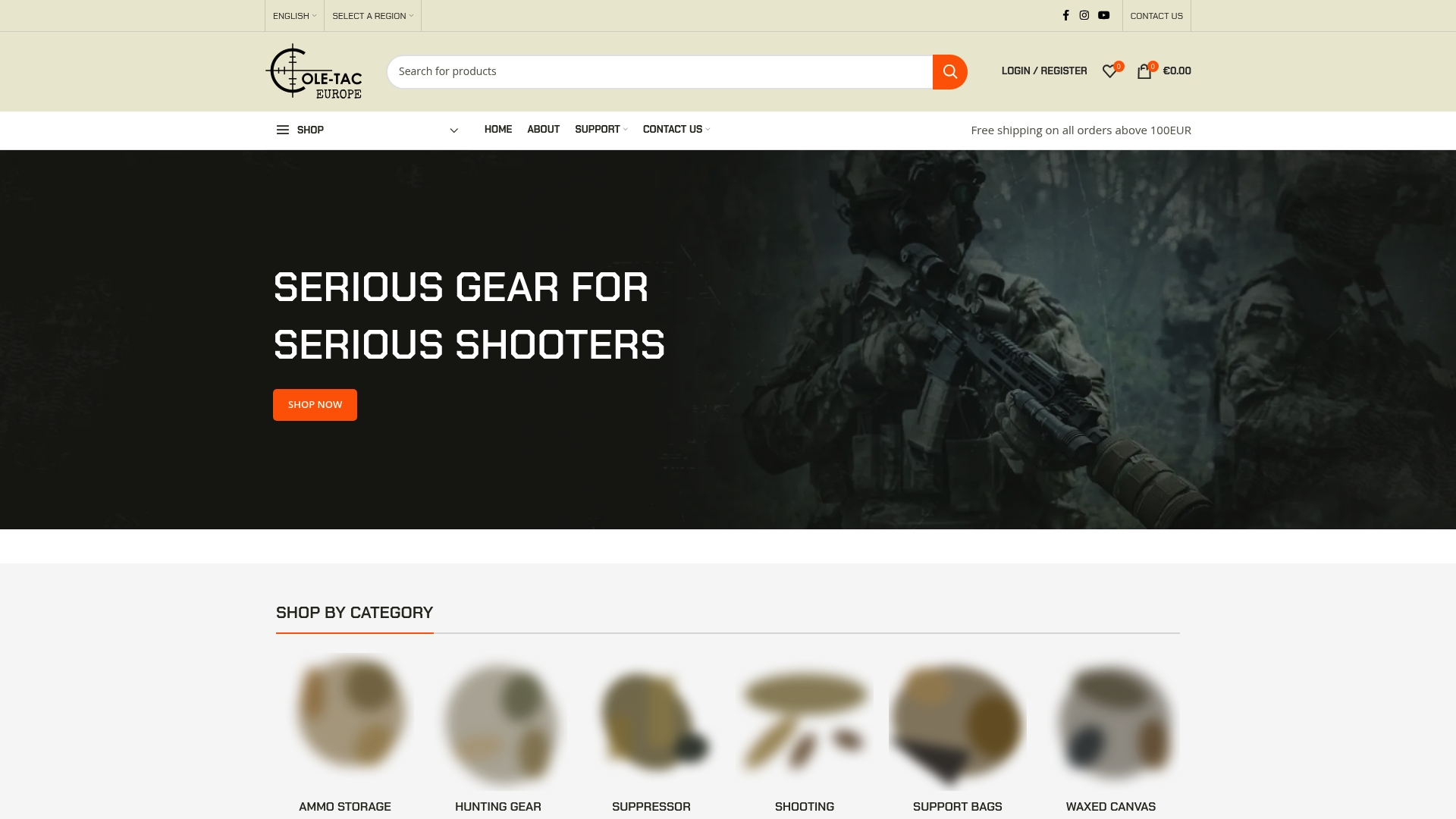
Explore the extensive collection at Cole-TAC Europe and discover gear crafted with EU-made precision to enhance your tactical readiness. Don’t wait to improve your shooting accuracy and safety. Visit https://coletac.eu now and equip yourself with the essential tools that the article says are key to mastering tactical shooting. Your next level of performance starts here.
Frequently Asked Questions
What is tactical shooting?
Tactical shooting is a complex discipline that involves marksmanship under extreme physical and psychological stress, requiring decision-making skills and situational awareness in dynamic environments.
What are the major types of tactical shooting disciplines?
The major types of tactical shooting disciplines include 3-Gun Competitions, Precision Rifle Series, and the International Practical Shooting Confederation (IPSC), each emphasizing different skills and challenges.
What skills are essential for successful tactical shooting?
Essential skills for successful tactical shooting include weapon handling, situational awareness, decision-making under pressure, and physical conditioning to manage stress and dynamic environments effectively.
How should I prepare for tactical shooting training?
To prepare for tactical shooting training, integrate high-intensity interval training and stress simulation exercises, focusing on building physical endurance and improving decision-making capabilities under pressure.